Families searching “study in Italy in English” often expect one national route. In practice the route starts with a named degree programme whose teaching language is English, then with that programme’s current admissions page for the cycle you intend (2026–2027 or 2027–2028). Below is what parents and applicants should verify before treating a country overview as an application plan: teaching language, academic eligibility, English evidence, any test, Universitaly pre-enrolment (national pre-enrolment for many non-EU applicants), and the separate student-visa decision.
- Find English-taught degrees at programme level; confirm language and rules on the university page, not from a title alone.
- Academic eligibility, English evidence, Italian-language rules and deadlines are not identical across Italian universities or even across degrees in the same university.
- Universitaly’s international-student procedures cover the 2026–2027 and 2027–2028 academic years; they do not replace course instructions.
- Institutional validation of pre-enrolment supports the study-visa file; it does not guarantee a consular appointment or a visa.
- If you also consider an Italian-taught degree, check the university’s Italian-language condition for your applicant category.
Start with the degree, not the country
“Study in Italy in English” is a search goal. Admissions work begins when you can name a subject, a degree level (bachelor’s / first cycle, master’s, single-cycle) and a programme page that states English as the teaching language.
For a bachelor’s applicant after secondary school, the first practical question is whether that university accepts the school qualification for that exact degree. Subject preparation, restricted access (limited places with a competitive selection) and open access can differ by programme. Confirm eligibility with the institution for your background and cycle; do not borrow another course’s policy.
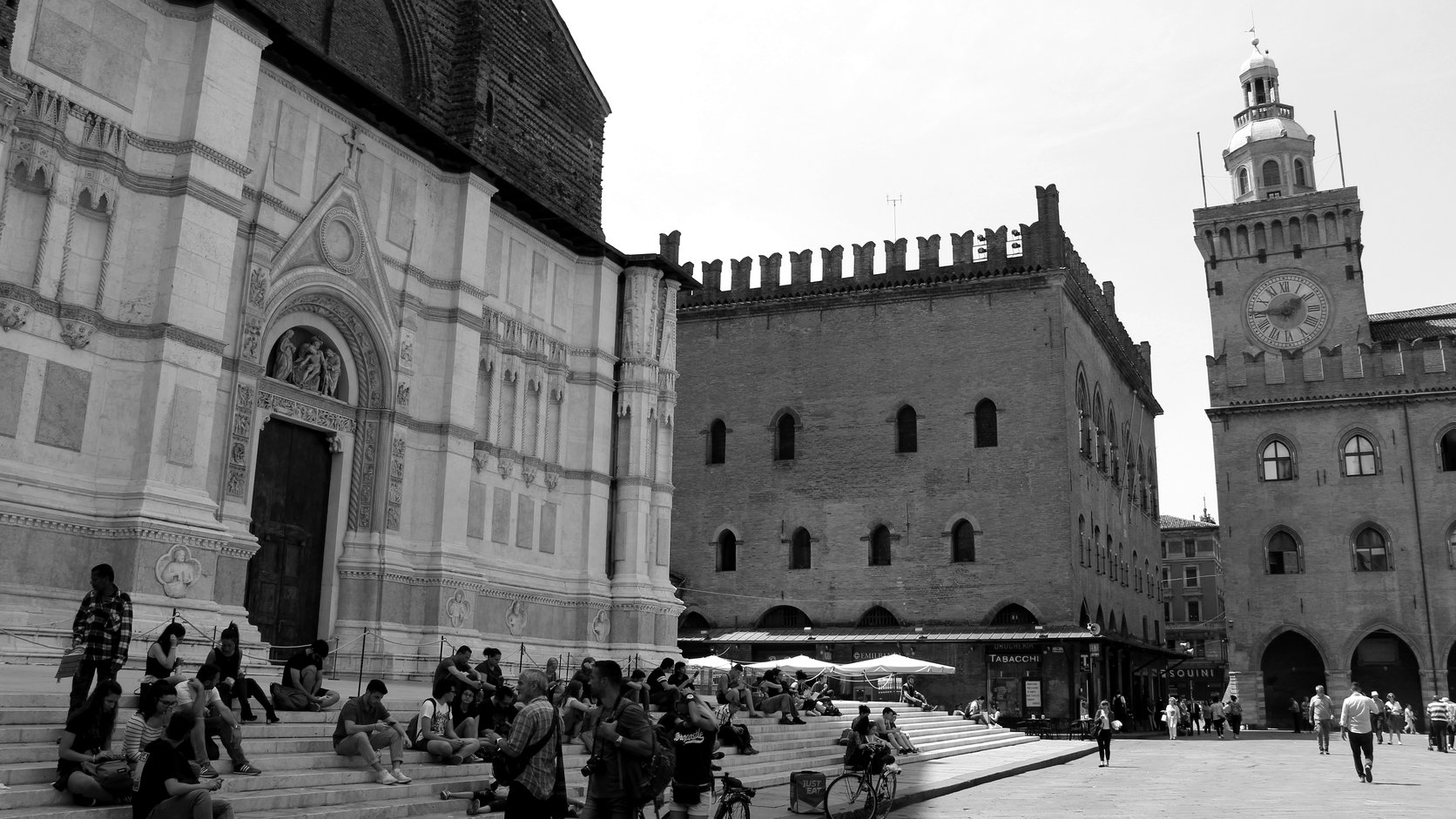
Concrete illustration — not a shortlist and not a recommendation. On the University of Bologna’s 2026/2027 programme pages, several first-cycle degrees are delivered entirely in English, including Economics and Finance (code 6646, restricted access), Business and Economics (code 6609, restricted access) and International Studies at the Forlì campus (code 6650, restricted access with TOLC-E). Teaching language, place of teaching and access type are printed on each programme page. Another faculty’s English degree, or the same title in a later cycle, can differ. Always re-open the page for the cycle you are targeting.
Use Universitaly to discover courses and the shape of Italian higher education, then move to the university’s own instructions. A catalogue line that says “international” or “English” is a lead, not proof that every component is taught in English or that you meet entry conditions.
Keep a working file for each candidate degree: title, level, confirmed teaching language, admissions URL, open questions. That file is what you compare later — not memory of a country brochure.
Separate academic checks from language checks
English as the language of instruction does not tell you which English evidence the university wants. On the course page, look for accepted tests or certificates, any minimum level, exemptions and whether the rule changes by applicant category. If the page is ambiguous, ask the admissions office which rule applies to you for the stated cycle.
Academic eligibility is a second check:
- accepted school qualifications and any subject prerequisites;
- English evidence required for enrolment or selection, if any;
- course-specific test, interview or assessment, if stated.
Italian-language rules must stay distinct from English requirements. The University of Bologna states that non-EU citizens residing abroad who choose a degree programme in Italian must meet its Italian-language requirement to enrol and start studying. That is a Bologna statement for Italian-taught degrees, not a blanket rule for every English-taught programme in Italy.
Bologna describes two ways to meet that Italian requirement: pass a university-organised test, or present a valid Italian-language certificate or a high-school diploma obtained in Italian. Its test is intended for degree programmes delivered in Italian. It cannot satisfy an Italian requirement for international students on English-language courses where such a requirement still applies. For an English-taught course, ask the university whether any Italian condition applies to your programme and category, and what evidence and timing it accepts. For an Italian-taught path, use dedicated Italian-language guidance and the university’s current page.
Build the application around the programme’s process
When a degree still looks suitable, follow its current instructions in order. Typical pieces — which ones apply depends on the course:
- 1. University application for that programme and cycle.
- 2. Any selection test or assessment named on the page.
- 3. National pre-enrolment on Universitaly, if your circumstances require it.
- 4. Enrolment steps after an offer, still under university rules.
Universitaly’s procedures for international students are valid for the 2026–2027 and 2027–2028 academic years. They coordinate guidance for higher-education institutions and diplomatic-consular representatives on entry, stay, enrolment and recognition of qualifications. They do not set one deadline for every English-taught bachelor’s degree, and they do not replace the programme page.
Treat tests as programme-specific unless the university says otherwise. CISIA describes the TOLC as a test that assesses basic knowledge and helps applicants choose a suitable university path; its site also lists other tests and preparation materials. That description does not mean every English-taught bachelor’s course requires a TOLC. International Studies at Bologna Forlì, for example, states restricted access with TOLC-E on its 2026/2027 page — other English degrees at the same university may name a different test or none. Check the test name, format, timing and how the result is used before you prepare.
Medicine needs the same course-level discipline. Universitaly publishes syllabi for single-cycle degrees in Medicine and Surgery, Dentistry and Dental Prosthetics, and Veterinary Medicine for the 2026–2027 academic year. A syllabus notice is not an English-taught admissions route. If the goal is medicine in English, confirm teaching language, assessment and application instructions on the exact course page for the cycle you want.
| Question | What to check | Where |
|---|---|---|
| Is the degree taught in English? | Teaching language; whether all components are in English. | Specific degree page; admissions office if unclear. |
| What academic conditions apply? | Accepted qualifications, prerequisites, selection criteria. | Programme admissions page for your cycle. |
| Is a test required? | Name, format, timing, role in selection. | Course instructions and test provider. |
| Does pre-enrolment apply? | Whether your category must complete it and how it fits the course. | University instructions + Universitaly international-student pages. |
Pre-enrolment and the student-visa step
University admission and national procedures can be connected and still produce separate outcomes. Check whether the university directs you to pre-enrolment and whether that step applies to your circumstances. Do not assume every international applicant follows the same route.
For applicants who need a student visa, the visa process is related to study plans but is not the university’s decision. Universitaly states that the final decision on a study visa belongs exclusively to the diplomatic-consular representative. This article is not legal advice.
Institutional validation of a pre-enrolment application and its documents does not guarantee an appointment to apply for a visa, and it does not automatically produce a visa. Keep three lines on the family calendar: university admission, pre-enrolment validation (if required), consular study-visa decision.
- Follow the university’s current instructions for admission and any pre-enrolment step.
- Use the official information that applies to your student-visa application, if needed.
- Track each process on its own; one positive outcome does not confirm the others.
Plan the cycle and keep a usable shortlist
Name the target academic year in notes and in every enquiry: 2026–2027 or 2027–2028. National procedures cover both years; programme deadlines do not travel with that statement. Opening and closing dates, document lists and selection stages come from the institution. Do not infer a deadline from another course, a previous cycle or a general national page. Recheck the course information for your intended cycle before you submit.
Working shortlist (parents can hold this as one page per degree):
- 1. Degree title, level, campus and confirmed teaching language.
- 2. Current admissions URL and the applicant category that matches your situation.
- 3. Documents, English evidence and tests only after the course page names them.
- 4. Whether pre-enrolment applies and how the university says to complete it.
- 5. Admission timeline separate from any student-visa timeline.
- 6. Funding: Universitaly refers to scholarships and other support, but eligibility is opportunity-specific — check the university before assuming support in the budget.
Compare subject focus, teaching language and the stated entry process. Then list the questions that could block eligibility and ask the university. A shortlist of two or three verified programmes usually beats a long list of unconfirmed titles.
Frequently asked questions
Can international students take a bachelor’s degree in Italy in English?
Yes, where a university offers a first-cycle degree taught in English and you meet that degree’s conditions. Bologna’s study pages include international programmes delivered entirely in English; confirm the specific bachelor’s course, teaching language and your eligibility with the university for your cycle.
What English level or test score do Italian universities require?
It depends on the programme and applicant category. Check the exact course page for accepted evidence, any minimum level and the admissions cycle. There is no single national English score for every English-taught degree.
Do I need Italian for an English-taught degree?
Do not assume a general Italian requirement for every English-taught programme. Bologna’s stated Italian requirement concerns applicants choosing a degree taught in Italian. For an English-taught course, ask whether any Italian condition applies to your programme and category. Daily life outside the classroom still often needs Italian; that is separate from the formal enrolment rule.
Does pre-enrolment guarantee a student visa?
No. Universitaly states that pre-enrolment validation does not guarantee a visa appointment or a visa outcome. The final study-visa decision belongs to the diplomatic-consular representative.
Are the 2026–2027 and 2027–2028 admissions rules identical?
Universitaly’s international-student procedures are valid for both academic years. That does not make course deadlines or entry requirements identical. Check each university page for the cycle you intend.
Are Economics and Finance or Business and Economics open to every applicant who speaks English?
No. Those Bologna 2026/2027 pages state English delivery and restricted access, among other conditions. Places, tests and document rules are on the programme page; English alone is not an offer.
What to do next
EDMONT helps applicants and families turn verified degree pages into a programme-specific application plan for study in Italy in English. Send an application with the course pages you are considering, your current qualification, citizenship and target admissions cycle. After the application, a consultation can be arranged; you receive a structured outline of requirements still to confirm and the next admissions steps. There is no guarantee of admission. Contact follows the agreed stages of support.
Related service: Undergraduate admission