EDMONT editorial publication

EDMONT Journal

News, changes and opportunities in international education.Weekly essays — on the EDMONT Substack
An ivy-covered Romanesque building at the University of Toronto, photographed in black and white

AnswerCanada

Applying to Canadian universities for 2027: requirements, deadlines, costs and funding

Canada is usually described as though it had one set of entry requirements: a grade to hit, an IELTS score, a January deadline. None of those national figures exists. Higher education is a provincial responsibility and entry requirements are set by each university, and they diverge more than most applicants expect. What follows is how that system actually works for 2027 entry, and where its real constraints lie.

Read
The Colosseum in Rome at night, black and white photograph

AnalysisItaly

Italian: how hard it is, what stands behind it, and the level a university requires

Italian has an unusual reputation: a language that carries itself along. That is partly true — the US Foreign Service Institute places it in the easiest category, at 24 weeks against 30 for Spanish and French. But where the language stops being a private matter and becomes a condition of admission, another logic applies: the Italian ministry's procedures require B2 as a floor, and a C1 certificate changes not the strength of the profile but the competition the candidate enters.

Read
A close-up of a dip pen writing lines of a letter on paper

AnswerInternational education

References and recommendation letters: why a downloaded template works against you

“Recommendation letter template” is among the most common searches from applicants, and it leads in the wrong direction. A template assumes one letter that suits everyone. In practice the three major admissions systems differ in how many letters they take, who writes them, in what form, at what length, and whether the applicant ever sees the text. A downloaded template breaks on the first of those differences.

Read
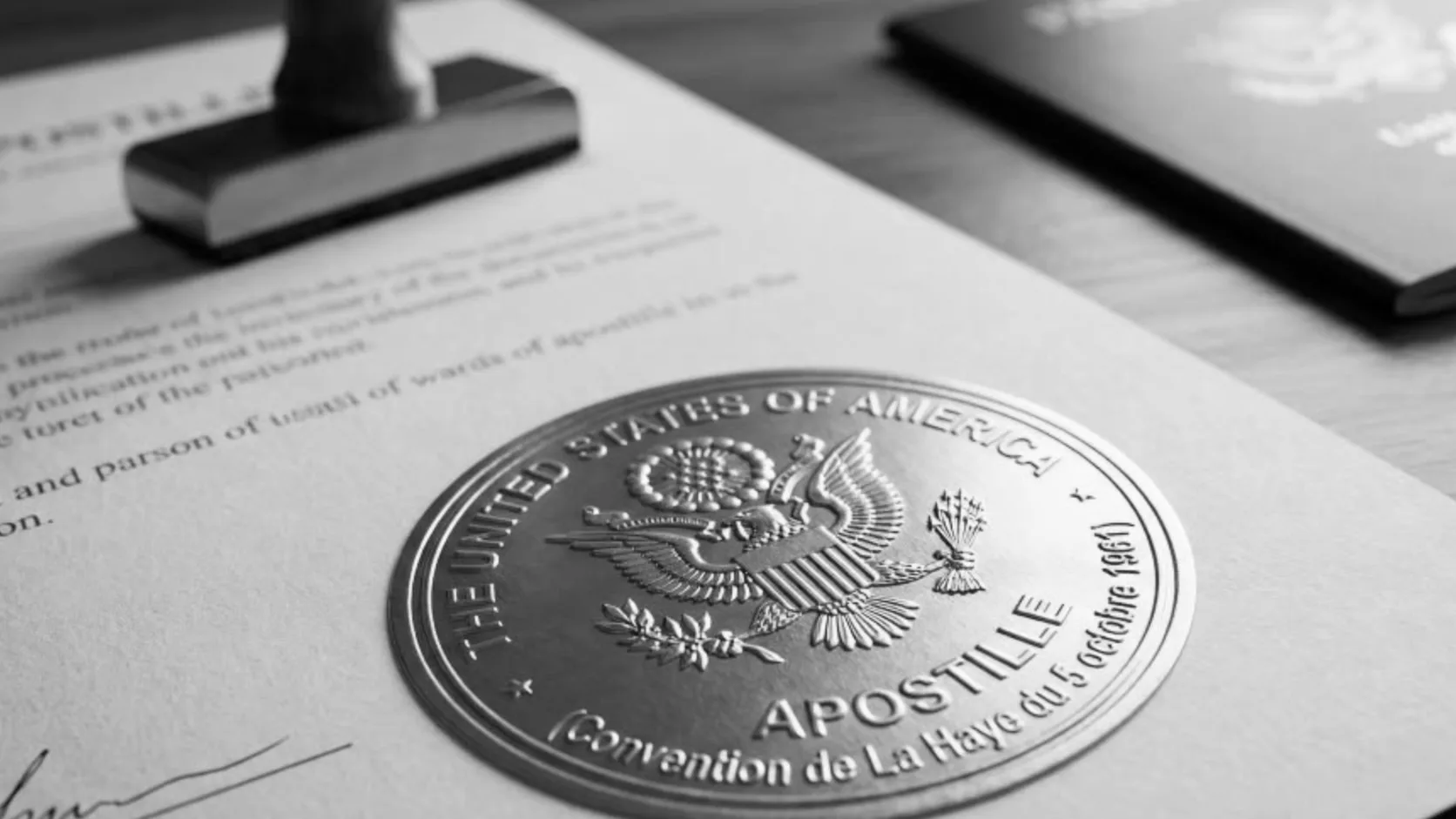
An embossed apostille seal on a document next to a passport

AnswerInternational education

Credential evaluation, apostille and sworn translation: what each country actually requires

A refusal on formal grounds looks the same everywhere: the documents arrive, and the application is not considered. The cause is almost always one of three things. The stamp is the wrong kind, the translation was made by someone without the standing to make it, or the qualification has never been compared with the local system. These are three separate procedures, with different authorities and different timelines, and none of them substitutes for another.

Read
The tiered eaves of a traditional Chinese roof with carved brackets, in black and white

AnswerChina

How to Apply to Universities in China in 2027: Requirements, CSCA, Deadlines and Scholarships

Applying to China for 2027 entry cannot be planned from the instructions of previous cycles. The China Scholarship Council has introduced the CSCA for international undergraduate applicants, the first nationwide element in a system where every requirement used to be set by the individual university. The CSCA subjects, the language requirements, the documents and the deadlines all remain the responsibility of the individual programme, and they differ even within one institution.

Read
A dressage rider in formal attire holding the reins

AnswerUnited States

The test-optional era is ending: which US universities now require the SAT or ACT

For the 2026–27 admissions cycle, six of the eight Ivy League universities require an SAT or ACT score. The pandemic-era test-optional policy that once looked like a lasting shift is being reversed at a growing number of the most selective US universities, on the strength of each institution's own admissions data. What is required now depends on the individual university, not on a general rule.

Read
The Palace of Westminster and Big Ben above the Thames at dusk

AnswerInternational education

Do you need an agency to apply to a university abroad, or can you apply on your own

The most common question about applying abroad is “which company did you apply through”. It is also the least useful one: the admissions committee does not see the agency. It sees the transcript, the credits in the relevant subjects, the language result and a statement written for that programme. The intermediary is not a variable in that equation. It can be a variable in the calendar, and in the list of mistakes that did not happen.

Read
Two antique pocket instruments with graduated dials in a museum case, black and white

AnalysisUnited States

F-1 visa: the fixed-period rule is on hold after a federal court order

For thirty-five years a student was admitted to the United States for as long as the course lasted. A rule due to take effect on 15 September 2026 would have replaced that with a fixed date — but the day before, a federal court put the rule on hold. Here is what the rule would require, what is happening to it now, and how to plan a 2027 application around it.

Read
The drawing room of an old villa with three tall windows: a figure with a dog looks out at the garden, black and white

AnalysisInternational education

Proof of funds for a student visa: five countries, five different logics

Two countries can ask for the same annual sum and still be incomparable on one question: whether the money has to be frozen. Proof of funds is built differently in each country, and it is the structure, not the figure, that decides whether a route is open to a particular family.

Read
Corinthian columns and a marble relief on the facade of a neoclassical building

AnalysisEurope

A PhD in Europe is a job, not a course of study

In the Netherlands, Sweden and Denmark a doctoral candidate is an employee of the university, with a contract, tax and pension contributions. This is not a variety of postgraduate study but a different system, and no admissions committee decides it.

Read
A student in academic dress carrying a stack of folders and papers

AnswerUnited States

SAT or ACT: how to choose the test for US colleges and universities

US colleges and universities accept both tests equally, so the choice comes down to the format that suits the applicant rather than to which test carries more weight. Whether a test is required at all, whether it may be retaken, and how the best result is counted are still set by each individual university.

Read
Black-and-white comparison of the architecture of Rome and Paris: the Colosseum and the Eiffel Tower

AnswerItaly and France

Italy or France: which is better value for a Russian student in 2026/27

Italy and France run on different financial models. In Italy the cost of studying at a public university often depends on the institution, the programme and the family’s financial situation, and support is spread across national, regional and university schemes. For 2026/27, France has published standard national rates for some public institutions, though exemptions from the higher fee and different rates at individual institutions are possible. A Russian applicant should choose on the combination of programme, how the qualification is recognised, language, available funding and the cost of living in the city concerned — not on a country’s average price.

Read
Black-and-white façade of the Reichstag in Berlin with German flags

AnswerGermany

Germany for Russian applicants: study without tuition fees, Studienkolleg and scholarships

German public universities often charge no tuition fees for undergraduate study or for most consecutive master’s programmes, but studying without tuition fees does not mean studying without costs. There are exceptions by federal state and by university, a compulsory semester contribution (Semesterbeitrag), insurance, living costs and proof of financial resources for the visa. For a Russian school leaver the central question is whether one particular set of documents opens direct access to the level they want, or whether a Studienkolleg (preparatory course) is required.

Read
Black-and-white photograph of a pendulum and clock movement in motion

AnswerEurope

From a Russian school to Europe: where direct entry is possible and where a preparatory year is needed

A Russian school-leaving certificate (attestat) awarded after eleven years of schooling is not assessed against a single rule across Europe. In France a Russian school leaver may apply to the first year on the same terms as other applicants, though the decision rests with the university. In Italy admission usually requires making up the missing twelfth year of education. In Germany direct access depends on the type of document, the year of award and any study that followed; where there is no direct access, a Studienkolleg (preparatory course) may be the route. In Austria the university assesses the qualification and may impose supplementary examinations and a preparation programme.

Read