Istituto Marangoni Milan: Admissions, Fees, Programmes and Scholarships for 2027
Which Istituto Marangoni courses carry Italian state recognition, how Fashion Design, Fashion Business and Interior Design differ at entry, what the 6 Creative Ideas are, the English requirement, EU and non-EU fees and the scholarships open now. Based on the official pages of the school, the Italian Ministry of University and Research and QS.
The short answer
Istituto Marangoni Milano is a private higher education institution in Italy’s AFAM system (art, music and design), authorised by the Ministry of University and Research (MUR) to award legally recognised degrees for specific courses. In Milan it runs two schools: Milano Fashion (fashion design, fashion communication, fashion business) and Milano Design (interior, product and visual design).
QS World University Rankings by Subject 2026, Art & Design: 45th in the world.
Three-year courses starting in 2027 cost non-EU students €20,450 to €25,800 a year: Fashion Design & Accessories €25,800, Interior Design €24,300 (January) or €24,850 (September). EU fees are lower. A €4,000 enrolment fee is charged on top, every year.
Taught in English or Italian, with a B2 certificate required for three-year courses.
No portfolio for undergraduate entry: creative courses ask for 6 Creative Ideas, business courses for a 700-word paper on an emerging trend.
Recognised courses require twelve years of prior schooling.
Two scholarships: Winter 2027 (apply by 30 November 2026) and Early Talent for September 2027 (apply by 1 March 2027), each up to €5,000 off tuition.
City
Milan: Milano Fashion and Milano Design
Status
Private AFAM institution, MUR-recognised courses
Ranking
QS Art & Design 2026: 45th
Undergraduate
3 years, 180 CFA (equal to 180 ECTS)
Language
English or Italian, B2
Next start dates
25 January 2027, 20 September 2027
Fashion Design, non-EU
€25,800 a year + €4,000 fee every year
Interior Design, non-EU
€24,300 (Jan 2027), €24,850 (Sep 2027) + €4,000 every year
Review my Istituto Marangoni application We look at your current education, the course you have in mind, your Creative Ideas or portfolio, your English, your timing and the funding available.
Status and recognition: what the Italian ministry recognises
Istituto Marangoni is not a university. It is a private institution in AFAM (Alta Formazione Artistica, Musicale e Coreutica), Italy’s higher education sector for art, music and design. The Ministry of University and Research (MUR) lists Istituto Marangoni in Milan among the private AFAM institutions authorised, under article 11 of Presidential Decree 212/2005, to award degrees with legal value.
Recognition belongs to a course, not to the brand. The three-year courses on the validation list lead to a Diploma Accademico di Primo Livello, which the MUR defines as a first-cycle degree of three years and 180 credits that gives access to second-cycle study. The school states that its 180 CFA (crediti formativi accademici) equal 180 ECTS and that the diploma is equivalent to a university bachelor’s degree.
In Milan the school lists as validated the three-year courses in Fashion Design & Accessories, Fashion Communication & Image and Fashion Management, Digital Communication and Media (Milano Fashion), and in Interior Design, Product Design and Visual Design (Milano Design). The course pages for Fashion Management & Brand Strategies and Fashion Product also show AFAM validation. Master’s courses (Master Accademico di Primo Livello) carry 60 CFA.
The Istituto Marangoni group is larger than its Milan school. It also teaches in Florence, Paris, London, Dubai and Riyadh, and awards there follow local rules: validation by Regent’s University London in London and Paris, the French RNCP register in Paris, CAA accreditation in Dubai. “A Marangoni degree is recognised” means little without a course and a city.
The name of the award may change. On 30 June 2026 the Minister of University and Research announced that academic diplomas from AFAM institutions will become laurea degrees in every respect. At the time of checking, the school had not said how this will affect the wording of its diplomas.
Beyond fashion: Milano Fashion and Milano Design
Istituto Marangoni in Milan is two schools. Milano Fashion teaches fashion design, fashion communication and fashion business; Milano Design teaches interior, product and visual design. The entry task follows the type of course: creative courses ask for 6 Creative Ideas, business courses for written work.
Istituto Marangoni Milano: programmes and entry tasks
Programme
School
Level
Recognition
Entry task
Starts in 2027
Non-EU, per year
Fashion Design & Accessories
Milano Fashion
Bachelor’s, 3 years
AFAM, 180 CFA
6 Creative Ideas
January, September
€25,800
Fashion Communication & Image
Milano Fashion
Bachelor’s, 3 years
AFAM, 180 CFA
Creative course: usually 6 Creative Ideas; confirm the format when applying
January, September
€25,800
Fashion Management & Brand Strategies
Milano Fashion
Bachelor’s, 3 years
AFAM, 180 CFA
Trend paper, about 700 words
January, September
€25,800
Fashion Management, Digital Communication and Media
Milano Fashion
Bachelor’s, 3 years
AFAM, 180 CFA
Trend paper, about 700 words
January, September
€25,800
Fashion Product
Milano Fashion
Bachelor’s, 3 years
AFAM, 180 CFA
Trend paper, about 700 words
January, September
€25,800
Interior Design
Milano Design
Bachelor’s, 3 years
AFAM, 180 CFA
6 Creative Ideas
January, September
€24,300 (January), €24,850 (September)
Product Design
Milano Design
Bachelor’s, 3 years
AFAM, 180 CFA
6 Creative Ideas
September only
€20,450
Visual Design
Milano Design
Bachelor’s, 3 years
AFAM, 180 CFA; new name Visual Communication Design under MUR review
6 Creative Ideas
September only
€20,450
Foundation in Fashion, Foundation in Design
Milano Fashion, Milano Design
Foundation year
School course; no validation shown on the course page
B1 language; no creative task listed
January, September
€14,850 (January), €14,950 (September), single fee
Fashion Design, One-Year
Milano Fashion
Intensive, 1 year
Istituto Marangoni certificate
Documents under the Intensive Courses rules
January, September
€25,850 (January), €21,000 (September)
Master’s: Interior Design, Fashion Design and others
Non-EU fees for the 25 January 2027 and 20 September 2027 intakes, from the Intake blocks on each course page. Enrolment fee: €4,000 for three-year courses, €5,500 for master’s courses. EU fees are in the fees table below.
Several of the same three-year courses also run in Florence, with the same non-EU fee and a different EU fee. This guide covers Milan. The school caps class sizes at 20 students on every campus.
How Marangoni compares with NABA, IED, Polimoda and the Politecnico di Milano on portfolio, set tasks, interview, language and fees is shown in the Fashion Admissions Matrix 2027.
Fashion Design & Accessories: the course and the entry task
Fashion Design & Accessories is a three-year, MUR-recognised Milano Fashion course (180 CFA) that takes students from drawing and construction to a collection of their own for the catwalk. Entry requires 6 Creative Ideas, a B2 certificate in the language of the course and twelve years of schooling; non-EU students pay €25,800 a year plus the €4,000 enrolment fee every year.
What the course teaches
In the school’s description, the first year is about technique: drawing, the figure and proportion, learnt from scratch. In the second year students begin a collection of their own; in the third they build a Fashion Industry Portfolio and a collection with a clear creative identity, costed for production with attention to circularity and sustainability.
The course covers pattern cutting and construction, technical drawing, 3D illustration and digital tools: Clo3D for prototyping, Photoshop, Illustrator, InDesign and generative AI. At the end of the third year an industry jury selects 10 students to show their collections during Milan Fashion Week and Pitti Uomo in Florence.
The careers the school lists: fashion designer, textile designer, trend forecaster, product developer, pattern maker, digital fashion designer, fashion illustrator.
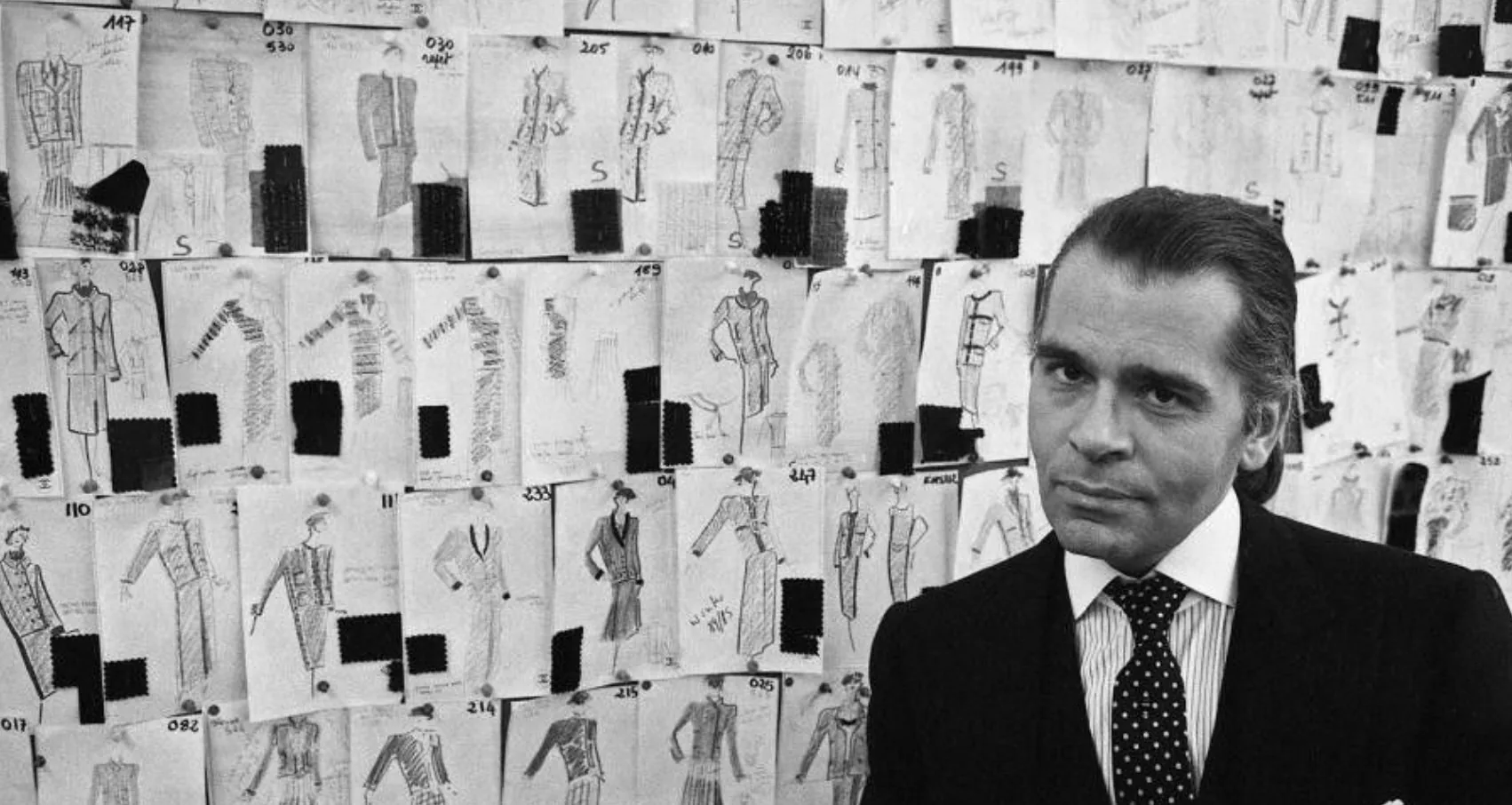
Sketches, fabric swatches, one theme developing. The 6 Creative Ideas can take any of these forms, but they are read together.
What to submit: 6 Creative Ideas
In the school’s words, the 6 Creative Ideas can be anything that visually describes the applicant’s inspiration and chosen area of study: sketches, drawings, photographs, mood boards and collages, or a mix of these; a personal reinterpretation of objects, environments, people or situations; and, for fashion, representations of the applicant’s own outfits or collections. All in A4 or A3, as .pdf, .tiff, .jpg or .zip.
With the task go a signed personal statement, a copy of the school-leaving certificate and grades (or a certificate of attendance if the final year is not finished), a passport copy, a photograph, a B2 certificate and proof of the enrolment fee transfer. The school states that professional experience is not required for undergraduate entry, that creative courses assess creative process and potential rather than technical skill, and that selection may include an interview.
Why six ideas are not a portfolio
Fees for every course and intake are in the fees table.
Interior Design in Milan: curriculum, entry task and fees
Interior Design at Istituto Marangoni is a three-year Milano Design course recognised by the MUR (Diploma Accademico di Primo Livello, 180 CFA, equal to 180 ECTS), taught in English or Italian. The next start dates are 25 January 2027 and 20 September 2027. Non-EU students pay €24,300 a year for January and €24,850 for September; EU students €19,950 and €20,450. The €4,000 enrolment fee is due every year. Applicants submit 6 Creative Ideas, not a professional portfolio.
What the course teaches
Students learn to read a space and shape its identity through colour, layout, acoustics, light, furniture and fabrics. The school names five main areas: residential, commercial, retail, public spaces and exhibition design, with a particular focus on luxury interiors such as flagship stores, showrooms, trade fair stands and the translation of brand identity into space.
The technical core is CAD, 3D modelling and rendering, full sets of drawings (plans, sections, dimensioned elevations), materials and lighting. The course includes industry projects with companies from concept to final presentation, an internship and a graduation showcase. The professional portfolio is what students build over three years: an outcome of the course, not a condition of entry.
Learning focus, as the school lists it
Spatial design
Designing public spaces
Residential design
Brand identity in interior design
Professional portfolio
Materials and surfaces
Illustration and colour technique
CAD
History of art and design
Research approaches
Interior Design, Milan: plan of study by year (the school’s Programme Specification)
Year
Main subjects
ECTS
Year 1
Design methodology (12), basic residential design (8), CAD/CAM modelling with a physical model (8), multimedia (8), design history and culture (6), materials science (6), design semiotics (4), foreign language (4)
60
Year 2
Interior Design 1: residential and commercial projects, concept, materials, lighting (12); Environment Design 1: real exhibition and retail spaces, immersive technologies and VR (12); design communication techniques (10); CAD 2 (8); colour design (4); new construction materials (4); sociology and anthropology of design (5)
60
Year 3
Interior Design 2 (12), AutoCAD and 3D visualisation (8), AI-assisted rendering (8), Environment Design 2 (6), management of enterprise performance (4), sociology and anthropology of design (5), internship (9), dissertation (8)
60
ECTS credits in brackets, from the programme specification; each year also includes free study activities.
Where graduates work: the school’s list
The course page and programme specification list: interior designer for residential, commercial and exhibition spaces; lighting designer; retail designer for stores and showrooms; furniture designer for custom pieces; spatial and experience design consultant; interiors for editorial and publishing; showroom management; consultant for exhibitions and installations; set designer.
How to apply for Interior Design
Interior Design is a creative course, so applicants submit 6 Creative Ideas under the general rules for three-year courses in Milan and Florence. The official list of forms includes interior subjects directly: representations of the applicant’s own ideas for interior spaces and furniture, reinterpretations of real environments, sketches, photographs, mood boards and collages, in A4 or A3.
The rest matches Fashion Design: a personal statement, twelve years of schooling for a recognised course, a B2 certificate in the language of the course and proof of the enrolment fee transfer.
Studying interior design in Milan: what to compare
Other private AFAM institutions in Milan teach interior design at first-degree level, among them IED (First Level Academic Diploma in Design, Interior Design specialisation). The public Politecnico di Milano admits to its design programmes through the competitive TOLD test.
None of the official sources behind this guide ranks schools on interior design specifically, so calling any of them the best in Italy for it would not be accurate. Marangoni’s verifiable reference point is different: 45th in QS Art & Design 2026, for the institution as a whole rather than for one course.
Fashion Business and Fashion Communication: a different kind of evidence
Applicants to the Milano Fashion business courses (Fashion Management & Brand Strategies; Fashion Management, Digital Communication and Media; Fashion Product) submit written work instead of Creative Ideas: about 700 words on one emerging trend in fashion or luxury. Non-EU fees match Fashion Design: €25,800 a year plus the €4,000 enrolment fee every year.
What the task asks for (official)
Identify one emerging trend in the fashion or luxury sector and show how it is emerging.
Ground it in consumer behaviour; the school’s examples are digital, sustainability and new textiles.
Add visual research and a list of references.
Submit it as a single PDF.
The Winter 2027 scholarship regulation words the task more broadly: a critical reflection on a contemporary phenomenon (sustainability, inclusivity, digitalisation) or an analysis of a brand of the applicant’s choice. For a standard application, follow the wording on the Entry Requirements page.
According to the school’s FAQ, business and management courses weigh different criteria: motivation, academic background and professional interests.
Fashion Communication & Image
This course teaches students to produce commercial and editorial shoots, advertising campaigns, fashion films and magazines, and to build a personal portfolio and website by the third year. The Entry Requirements page assigns 6 Creative Ideas to creative courses and written work to business courses without naming Fashion Communication & Image. We treat it as a creative course but recommend confirming the task format with admissions before preparing it.
International qualifications and the 12-year rule
Recognised (AFAM) courses at Istituto Marangoni require twelve years of prior schooling. Applicants whose school system is shorter must cover the gap with a qualification the Italian procedure accepts, and must do so before enrolment.
The rule is national, not the school’s own. The MUR procedures for international students for 2026/27 and 2027/28 require, for first-cycle study, a school-leaving qualification awarded after at least twelve years of schooling. Annex 1 (Allegato 1) lists what an institution may accept where schooling lasted eleven years:
proof of all first-year exams passed at a higher education institution;
an official one-year post-secondary, non-university qualification in a subject related to the chosen course;
a foundation course certificate from an Italian university or a recognised foreign institution;
the institution’s own foundation course certificate, where it prepares for the chosen course at the same institution.
These qualifications allow entry to the first year only; they do not shorten the course.
Whether a given qualification works for a given course is decided by the institution. The school’s pages do not state whether its own Foundation in Fashion or Foundation in Design counts as the missing year for a recognised course, so get that confirmed in writing before paying. For the visa and enrolment, the school certificate is usually accompanied by a CIMEA statement of comparability or a Dichiarazione di valore; the MUR procedures leave the choice to the institution. Non-EU applicants living abroad also pre-enrol through the Universitaly portal.
How education documents are prepared and legalised for Italy is covered in our guide to legalising education documents; the wider logic of Italian admissions is on our page on studying in Italy.
English requirements: B1, B2 and IELTS
Istituto Marangoni in Milan requires a B2 certificate in the language of instruction for three-year and master’s courses, and B1 for Foundation. The certificate applies to students whose first language is not English or Italian and must be no more than two years old at the start of the course.
English at Istituto Marangoni Milano: thresholds in the school’s official documents
Course
Level
IELTS
Other certificates
Where stated
Foundation
B1
4.5–5.0, no element below 4.0
Cambridge 140–159, PTE Academic 30–49, Trinity ISE I
Entry Requirements; certificate list (PDF)
Three-year AFAM courses
B2
5.5 or above, no element below 4.0 (PDF); 5.0 given as an example on the requirements page
Cambridge 160+, PTE Academic 50+, Trinity ISE II
Entry Requirements; certificate list (PDF)
Master’s AFAM courses
B2
5.5 or above, no element below 4.0
Cambridge 160+, PTE Academic 50+
Entry Requirements; FAQ; PDF
The school’s official materials do not agree on the numbers. The Entry Requirements page gives IELTS 5.0 as an example of B2. The school’s published certificate list for Milan and Florence sets IELTS 5.5 or above, with no element below 4.0, for every B2 AFAM course, and the FAQ quotes 4.5–5.0 for three-year courses. For Italian, the same list gives CILS UNO (B1), CELI 2 from 94 points and PLIDA B1 for three-year courses, and CILS DUE (B2), CELI 3 from 117 points and PLIDA B2 for master’s courses.
Non-EU applicants face an external threshold too. For visas for courses not taught in Italian, the MUR procedures require a certificate at no less than B2 covering all four skills: listening, reading, speaking and writing.
According to the school’s FAQ, every Istituto Marangoni course is taught in English and some undergraduate courses in Italy are also offered in Italian; the Milan intake blocks for three-year courses list both. Italian helps even on an English-taught course, with housing, banking and paperwork. The level Italian universities require for Italian-taught programmes is covered in our guide to Italian for university.
Istituto Marangoni fees in Milan: EU and non-EU
A three-year course in Milan starting in 2027 costs non-EU students €20,450 a year (Product Design and Visual Design, September) to €25,800 (Fashion Design & Accessories and the Fashion Business courses); EU fees run from €18,300 to €22,550. A €4,000 enrolment fee comes on top, and the three-year course pages state that it is due every year.
Istituto Marangoni Milano: tuition and enrolment fee, 2027 intakes
Programme
Level
Campus
Start
Tuition, EU
Tuition, non-EU
Enrolment fee
Fee every year
Language
Fashion Design & Accessories
AFAM bachelor’s, 3 years
Milan
25.01.2027 and 20.09.2027
€22,550
€25,800
€4,000
Yes
Italian, English
Interior Design
AFAM bachelor’s, 3 years
Milan
25.01.2027
€19,950
€24,300
€4,000
Yes
Italian, English
Interior Design
AFAM bachelor’s, 3 years
Milan
20.09.2027
€20,450
€24,850
€4,000
Yes
Italian, English
Fashion Communication & Image; three Fashion Business courses
AFAM bachelor’s, 3 years
Milan
25.01.2027
€21,550
€25,800
€4,000
Yes
Italian, English
Fashion Communication & Image; three Fashion Business courses
AFAM bachelor’s, 3 years
Milan
20.09.2027
€22,550
€25,800
€4,000
Yes
Italian, English
Product Design; Visual Design
AFAM bachelor’s, 3 years
Milan
20.09.2027 (no January intake)
€18,300
€20,450
€4,000
Yes
Italian, English
Foundation in Fashion; Foundation in Design
Foundation, 1 year
Milan
25.01.2027
€14,850 (single fee)
€14,850 (single fee)
€4,000
One-year course
Italian, English
Foundation in Fashion; Foundation in Design
Foundation, 1 year
Milan
20.09.2027
€14,950 (single fee)
€14,950 (single fee)
€4,000
One-year course
Italian, English
Fashion Design, One-Year
Intensive, 1 year
Milan
25.01.2027
€23,800
€25,850
€4,000
One-year course
Italian, English
Fashion Design, One-Year
Intensive, 1 year
Milan
20.09.2027
€21,000 (single fee)
€21,000 (single fee)
€4,000
One-year course
Italian, English
Master Interior Design
AFAM master’s course, 60 CFA
Milan
25.01.2027
€27,650
€30,900
€5,500
9-month course
Italian, English
Master Interior Design
AFAM master’s course, 60 CFA
Milan
20.09.2027
€28,300
€31,450
€5,500
9-month course
Italian, English
The three Fashion Business courses: Fashion Management & Brand Strategies; Fashion Management, Digital Communication and Media; Fashion Product. “Single fee” means the school publishes one amount without an EU and non-EU split. EU and non-EU are the school’s own fee labels. The annual enrolment fee is stated on the three-year course pages.
According to the school, tuition covers teaching, access to laboratories and studios and academic services; materials, accommodation and living costs in Milan are extra, and the school does not run its own residences.
Istituto Marangoni scholarships: what is open now
As of 1 October 2026 two campaigns are open for Milan: Scholarships Winter 2027 for courses starting in January and February 2027 (deadline 30 November 2026) and the Early Talent Scholarship for courses starting in September 2027 (deadline 1 March 2027). Each is a tuition deduction of up to €5,000; neither covers the enrolment fee.
Current as of 1 October 2026
Scholarships Winter 2027: open until 30 November 2026
A tuition deduction of up to €5,000 at the European schools: Milan (Milano Fashion and Milano Design), Florence and Paris.
Courses starting in January and February 2027: Foundation, One-Year, three-year and master’s courses.
On three-year courses the deduction applies to the first year only.
The enrolment fee is always due: the scholarship reduces tuition only.
Applications are assessed on a rolling basis; one application per school; entry is free; all materials are submitted in English.
Winners confirm within 3 working days and pay the enrolment fee within 5; deferring the start cancels the deduction.
Documents: school certificate and grades, passport, a signed motivation statement and, for three-year courses, the 6 Creative Ideas or the trend paper and a language certificate (a self-certification is accepted if it will be submitted before the course starts).
Current as of 1 October 2026
Early Talent Scholarship, Autumn 2027: open until 1 March 2027
A tuition deduction of up to €5,000 at Milan (Milano Fashion and Milano Design), Florence and Paris.
Courses starting in September 2027: Foundation, One-Year, Undergraduate Progression, three-year and master’s courses.
The application must be completed by 1 March 2027.
On three-year courses the deduction applies to the first year only; the enrolment fee is always due in full.
The terms match Winter 2027: rolling assessment, one application per school, free to enter, English-language materials; winners confirm the deduction within 3 working days and pay the enrolment fee within 5.
Closed: Talent Contest in partnership with Altagamma (September 2026 and January 2027 intakes), deadline 15 September 2026.
Marangoni scholarships are usually tuition deductions awarded through competitive calls. Each campaign has its own intake, courses and deadline, so last year’s terms are no basis for planning.
The school also takes part in the regional right-to-study programme (DSU), whose grants are awarded by competition, and offers a tuition loan through a partner bank only to students or guarantors with an income in Italy or France. How to plan funding across several European options is covered in our scholarship strategy guide and on our scholarships and funding page.
January or September intake
Istituto Marangoni publishes a January 2027 intake (25 January) for Fashion Design & Accessories, Fashion Communication & Image, the three Fashion Business courses, Interior Design, Foundation, One-Year and master’s courses. Product Design and Visual Design start in September only. January 2027 fees match September 2026; some September 2027 fees are already higher.
Milan: non-EU tuition by 2027 intake
Course
25 January 2027
20 September 2027
Fashion Design & Accessories
€25,800
€25,800
Fashion Communication & Image, three Fashion Business courses
€25,800
€25,800 (EU fee up from €21,550 to €22,550)
Interior Design
€24,300
€24,850
Product Design, Visual Design
No intake
€20,450
Foundation in Fashion, Foundation in Design
€14,850
€14,950
The school publishes start dates, not a general application deadline. External deadlines come from scholarships and visas. Under the MUR procedures, visa applications for first-level academic courses must be lodged by 30 November 2026 for 2026/27 and by 31 October 2027 for 2027/28, and institutions may set earlier dates for their own courses. Pre-enrolment for the visa goes through the Universitaly portal only.
The application timeline for international students
An application to Istituto Marangoni runs through nine steps, and two of them (twelve years of schooling and English) set the timetable more than the creative task does. The calendar below is relative: the school publishes start dates, not application deadlines.
01
Choose the programme
12–18 months before the start. Course, city and status: is the programme on the MUR validation list, is it creative or business, which language.
02
Check your qualification
At the same time. Does your school-leaving qualification count for twelve years, what covers any gap, and will you need a CIMEA statement or a Dichiarazione di valore.
03
English
9–12 months before. Leave room for a resit; the certificate must be under two years old at the start.
04
Entry task and personal statement
6–9 months before. The 6 Creative Ideas or the 700-word trend paper, plus a signed motivation statement.
05
Application
On the school’s online platform: form, documents and the enrolment fee, whose proof of payment is part of the file. Check the refund terms before paying.
06
Offer
The confirmation appears in the applicant area. If a document is missing, such as the English certificate, the offer may be conditional.
07
Scholarship
Alongside the application, within the campaign deadline. A deduction must be accepted within 3 working days.
08
Tuition
After the offer, using the amount and payment details in the applicant area.
09
Pre-enrolment and visa
For non-EU applicants: pre-enrolment on Universitaly and a study visa application at the consulate by the MUR deadline or any earlier date the school sets.
This is a general sequence. A personal calendar depends on your current studies and the intake you choose.
Common mistakes when applying to Marangoni
Most errors are made before the creative task: in assessing the status of the course, the school-leaving qualification and the budget.
Assuming every Marangoni course has the same status. MUR recognition belongs to specific courses in Milan and Florence; one-year intensives lead to a school certificate, and London, Paris and Dubai follow other validations.
Preparing a large portfolio instead of six ideas. Volume does not replace coherence, and no portfolio is requested for undergraduate entry.
Checking the twelve-year rule after paying. Without a qualification the ministerial procedure accepts, three years of study end with a school certificate rather than a degree.
Budgeting for tuition alone. The €4,000 enrolment fee is due every year: €12,000 over a three-year course.
Relying on an expired scholarship deadline. Campaigns change from intake to intake: the Altagamma Talent Contest closed on 15 September 2026, Winter 2027 is open until 30 November 2026, and Early Talent for September 2027 until 1 March 2027.
Choosing between Fashion Design and Fashion Business by the school’s name. The courses test different evidence: visual direction in one case, analysis and argument in the other.
Taking IELTS aiming for 5.0 because of the example on the requirements page. The official certificate list sets 5.5 for B2, and the visa requires B2 in all four skills.
Who Marangoni suits, and what to compare it with
Marangoni makes sense for an applicant who wants to study in Milan in English, is choosing between fashion and design in an applied, industry-facing format, and can state a clear direction in six ideas or in a trend analysis. If other things matter more, compare it with its neighbours.
Public fees and a university model matter most: the Politecnico di Milano, where design entry is by competitive test and the fashion programme is taught in Italian.
An art academy with a choice between a set project and a portfolio: NABA.
A choice of Italian cities and a set project with a published scoring scale: IED.
This is not a ranking: the schools suit different applicants. The wider picture across Italy, the UK, France and the US is in our guide Where to Study Fashion.
Istituto Marangoni: frequently asked questions
What are the admission requirements for Istituto Marangoni?
For a three-year course in Milan: the online application, a signed personal statement, a copy of your school-leaving certificate and grades, a passport copy, a photograph, a B2 certificate in the language of the course, proof of the enrolment fee transfer and an entry task: 6 Creative Ideas for creative courses or a 700-word trend paper for business courses. Recognised courses also require twelve years of schooling.
Does Istituto Marangoni require a portfolio?
Not for undergraduate courses. Creative courses ask for 6 Creative Ideas and business courses for a 700-word trend paper. A portfolio of 10–12 pieces is required for creative master’s courses.
What are the 6 Creative Ideas for Istituto Marangoni?
Six pieces that visually show your inspiration and chosen field: sketches, drawings, photographs, mood boards, collages or a mix, in A4 or A3 (.pdf, .tiff, .jpg, .zip). Reinterpretations of objects and spaces and your own ideas for outfits, furniture or interiors all count.
What IELTS score does Istituto Marangoni require?
Three-year and master’s courses require B2. The school’s official certificate list sets IELTS 5.5 or above with no element below 4.0, although the requirements page gives 5.0 as an example. Foundation requires B1 (IELTS 4.5–5.0, no element below 4.0). The certificate must be under two years old at the start of the course.
How much does Istituto Marangoni cost in Milan?
Three-year courses starting in 2027 cost non-EU students €20,450 to €25,800 a year and EU students €18,300 to €22,550, plus a €4,000 enrolment fee every year. Fashion Design & Accessories is €25,800 non-EU and €22,550 EU.
How much is Interior Design at Istituto Marangoni?
Non-EU students pay €24,300 a year for the 25 January 2027 start and €24,850 for 20 September 2027; EU students €19,950 and €20,450. The €4,000 enrolment fee is due every year.
Does Istituto Marangoni offer scholarships?
Yes, as tuition deductions awarded through competitive calls. As of 1 October 2026 two campaigns are open: Scholarships Winter 2027 for courses starting in January and February 2027 (deadline 30 November 2026) and the Early Talent Scholarship for courses starting in September 2027 (deadline 1 March 2027). Each is worth up to €5,000 at Milan, Florence and Paris, and the enrolment fee remains payable in full.
Can international students study at Istituto Marangoni in English?
Yes. The school states that all its courses are taught in English, with some undergraduate courses in Italy also offered in Italian. A B2 certificate is required.
Is Istituto Marangoni a university?
No. It is a private institution in Italy’s AFAM higher education sector. The MUR has authorised it to award degrees with legal value for recognised courses, and its three-year first-level diploma is equivalent to a university bachelor’s degree.
Is an Istituto Marangoni degree recognised in Italy?
Yes, when the course is MUR-recognised and the student meets the ministerial requirements: the award is then a Diploma Accademico di Primo Livello worth 180 CFA. Otherwise, under the school’s own regulation, the student receives an Istituto Marangoni certificate.
When do Istituto Marangoni courses start?
The next start dates in Milan are 25 January 2027 and 20 September 2027. Not every course has a January intake: Product Design and Visual Design start in September only.
What is the difference between Fashion Design and Fashion Business at Istituto Marangoni?
Fashion Design teaches students to create a collection and asks for 6 Creative Ideas at entry. Fashion Business teaches brand, product and communication management and asks for a written trend paper. Non-EU tuition is the same: €25,800 a year.
Can I apply to Interior Design at Istituto Marangoni without a professional portfolio?
Yes. Undergraduate Interior Design applicants submit 6 Creative Ideas; the professional portfolio is built during the course. The school states that professional experience is not required for undergraduate entry.
What if my school system is shorter than twelve years?
For a recognised course you need to cover the gap before enrolment, for example with a passed first year at university, a one-year related post-secondary qualification or an accepted foundation course. The institution decides which qualification it accepts, so confirm it in writing before paying.
Is there an interview for Istituto Marangoni?
Possibly. The school’s FAQ says selection may include an interview about the applicant’s experience and aims; the Entry Requirements document list does not mention one.
EDMONT / METHOD
How we assess an Istituto Marangoni application
Most lost years happen before the creative task: at the status of the course, the twelve-year rule and English.
01
Formal eligibility
Whether your education counts for twelve years, what covers any gap and whether your chosen course will accept it.
02
Evidence
What in your work or writing already shows a direction, and what is missing for the 6 Creative Ideas or the trend paper.
03
Programme fit
Fashion Design, Business, Communication or Interior Design, chosen by the evidence you have and the work you want to do.
04
Funding
A budget that includes the annual enrolment fee, the scholarship campaigns open to you and their real deadlines.
05
Timeline
English, entry task, application, scholarship and visa in one sequence for the intake you choose.
06
Application
Documents, the applicant area, correspondence with the school and Universitaly pre-enrolment.
If you are considering Fashion Design, Fashion Business or Interior Design, we start with the formal eligibility of your education, then look at the requirements of the specific programme, your Creative Ideas or portfolio, English, funding and timing. At that point it becomes clear which route is worth building.
EDMONT / admissions discussion
The applicant’s profile
Tell us where you study now, which Marangoni course you are considering (Fashion Design, Business, Communication or Interior Design) and for which intake. That is enough for a first substantive reply.