Where to Study Fashion: Italy, the UK, France or the US?
Milan, London, Paris and New York train different kinds of fashion professional, and their schools select in different ways. This guide compares what each programme actually asks an applicant to show, using the institutions’ own published requirements.
Most conversations about fashion school begin with a name: Central Saint Martins, Parsons, Istituto Marangoni. It is a reasonable place to begin. It is a poor place to decide.
Schools do not admit students to fashion in general. They admit them to a course, and courses in the same building can ask for almost opposite things. At London College of Fashion, BA Fashion Design and Development asks for a portfolio of up to 30 pages; BSc Fashion Management, at the same college, has no portfolio stage at all.
The more useful question is what a particular programme expects to see from a particular applicant, and whether that applicant can show it in time.
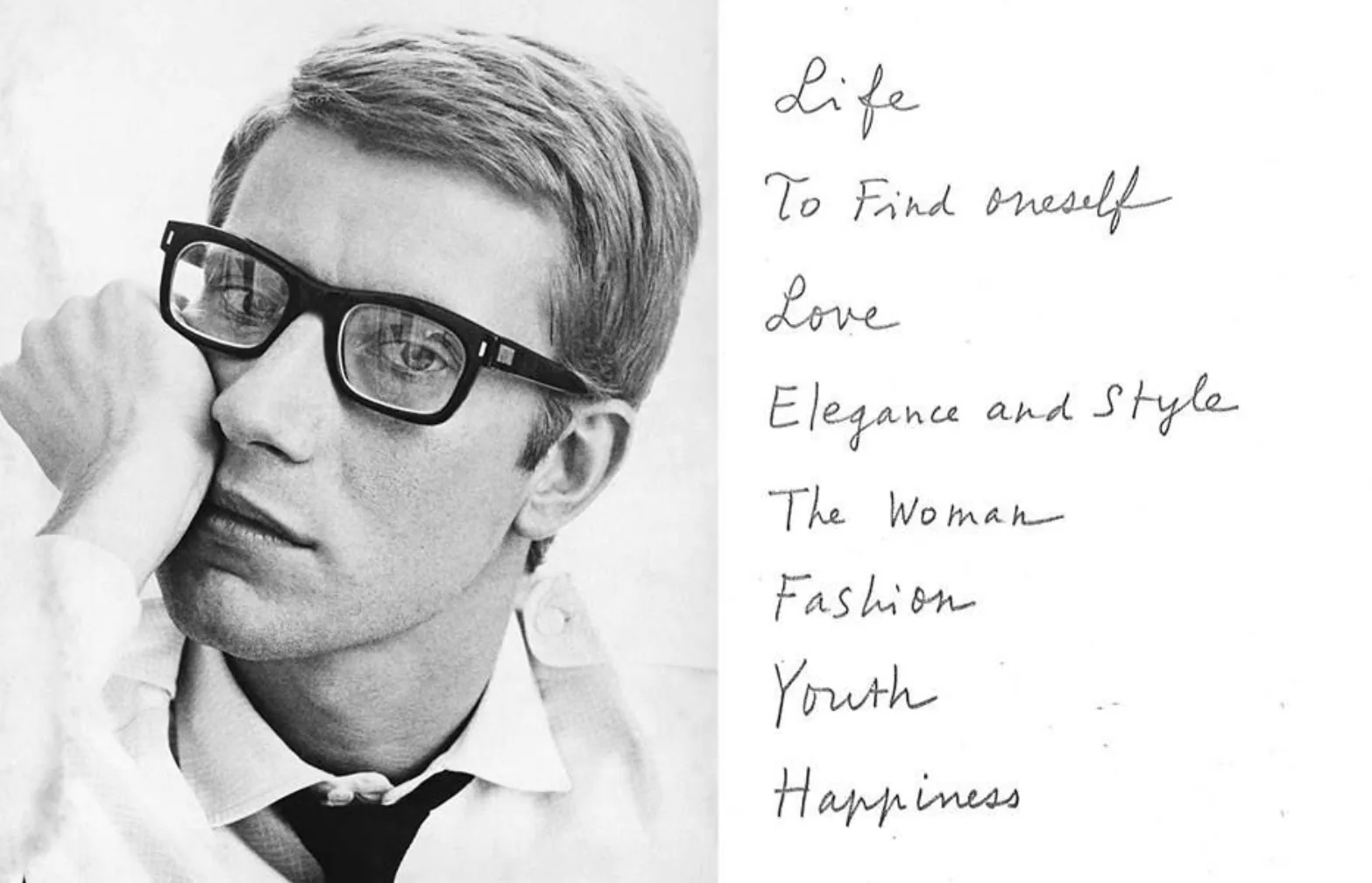
Yves Saint Laurent, with a handwritten list beside the portrait.
The premiseA recognisable name is not, on its own, a selection strategy.
Fashion education is not one discipline
Prospectuses use one word for a field that admissions teams treat as several. The discipline decides what an application has to prove, and the gap between disciplines is wider than most applicants expect.
01Fashion Design
Garments and collections: research, drawing, pattern cutting, construction and, in time, a recognisable design voice.
What admissions look for Visual work almost everywhere: a portfolio, a set brief or both. FIT also asks to see garments the applicant has sewn.
02Fashion Business and Management
How fashion companies plan, source, price, sell and grow.
What admissions look for Academic record, numeracy and written reasoning rather than a portfolio. LCF lists strong numeracy skills among the selection criteria for BSc Fashion Management.
03Fashion Communication
Image-making, publishing, film, art direction, journalism and PR.
What admissions look for It depends on the school. At Central Saint Martins it follows the art-school route, with a foundation year and a portfolio; elsewhere it sits closer to a media degree.
04Fashion Marketing
Consumers, brands, channels and data.
What admissions look for An analytical interest in the market: a personal statement at LCF, an essay on five inspirations and a questionnaire at Polimoda.
05Styling and Image
Building an image around clothes that already exist, usually taught within communication programmes.
What admissions look for Editorial and photographic work. The boundary with design is real: Parsons recommends that applicants to its design programmes do not submit styling of pre-made or purchased garments.
06Luxury Management
Brand heritage, clienteling, retail and the economics of scarcity.
What admissions look for Mostly a master’s subject in the schools covered here, such as IFM’s MSc in International Fashion & Luxury Management. At undergraduate level it usually appears inside fashion business degrees.
07Buying and Merchandising
Range planning, sourcing, pricing and trading: the commercial core of fashion retail.
What admissions look for Grades and industry awareness. LCF’s BA Fashion Buying and Merchandising asks for six GCSEs including maths and English, and lists fashion industry experience among its selection criteria.
08Textiles and Accessories
Knit, print, surface, bags, footwear and jewellery.
What admissions look for Often a pathway rather than a separate application: CSM’s Fashion Design BA has Knit and Print pathways, and IFM students choose knitwear, footwear or bags from the second year.
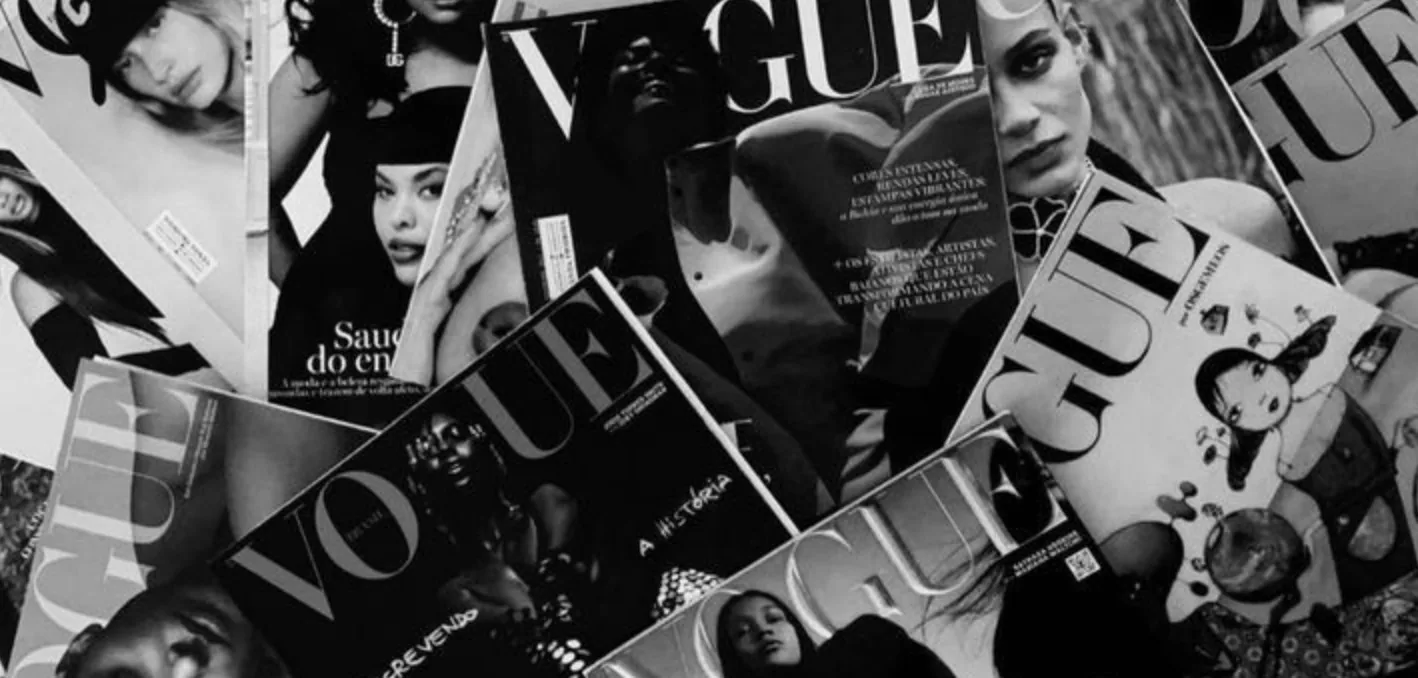
Vogue covers. Fashion Communication is about the image and the publication as much as the garment.Short answer
Can you study Fashion Business without a design portfolio?
Yes. None of the undergraduate fashion business or management programmes reviewed here asks for a design portfolio: LCF’s BSc Fashion Management and BA Fashion Marketing, IFM’s BSc in Management for Fashion and Creative Industries, Istituto Marangoni’s business courses, Polimoda’s Fashion Business and FIT’s Fashion Business Management select on academic record and written work. At Parsons, a portfolio is optional for the BBA in Strategic Design and Management.
Written and analytical work still counts; it simply takes other forms. Marangoni asks for a 700-word trend paper, Polimoda for an essay on five inspirations, IFM for written answers and an interview, LCF for a personal statement that shows numeracy and knowledge of the industry. Visual literacy still counts: several of these tasks ask for images alongside the text.
The practical consequence is simple to state and often ignored: an applicant undecided between design and business should settle that question first. It changes which schools are relevant, whether a preparatory year makes sense and whether a portfolio is needed at all.
Italy, the UK, France and the US: four structures, not four styles
The four countries are usually compared by reputation. The more useful comparison is structural: who awards the degree, how an application is made and what kind of evidence decides it.
A map of fashion education: Milan, London, Paris, New York
01Milan, Florence
Italy
Private academies within AFAM, the arts branch of Italian higher education regulated by the Ministry of University and Research (MUR), alongside a public polytechnic university.
Degree
First Level Academic Diploma, 180 ECTS, equivalent to a bachelor’s
Selection
Set creative or written tasks, portfolios, interviews; a test at the Politecnico
Language
English or Italian tracks
Watch for
Twelve years of prior schooling for recognised courses
02London
United Kingdom
Colleges of a single university, University of the Arts London, applied to course by course through UCAS.
Degree
BA or BSc (Hons) over three years, with an optional placement year
Selection
Grades and personal statement, then portfolio and online interview for design
Language
English; IELTS 6.0 or 6.5 depending on the course
Watch for
A foundation year before design at Central Saint Martins
03Paris
France
State-recognised private schools alongside public art schools; applicants in the French system apply through Parcoursup.
Degree
Grade de licence (IFM) or RNCP level 6 certification (ESMOD)
Selection
Application file, set creative tasks, jury interview
Language
French or English tracks
Watch for
Which platform your diploma sends you to
04New York
United States
An art and design school within a university (Parsons at The New School), a public college within SUNY (FIT) and an art institute (Pratt).
Degree
BFA or BBA; at FIT a two-year AAS comes first
Selection
School record, essays, recommendations and a portfolio
Language
English; IELTS 7.0 at Parsons
Watch for
American deadlines, from 1 November
It is tempting to shorten this to Italy for luxury, London for creativity and the US for business. The structures do not support it. Milan has business-led academies and a public design university. London’s most commercial fashion courses belong to the same university as its most experimental ones. Paris trains managers for the creative industries next to pattern cutters. And Parsons begins its fashion degree with a year of general art and design.
Italy: Milan, Florence and five admissions models
Milan concentrates most of Italy’s fashion schools, and Florence has the one most often compared with them. But the city tells an applicant less than the model of admission each school uses, and in Italy those models differ sharply.
Istituto Marangoni Milano: set tasks instead of a portfolio
Milan
Private, AFAM
Fashion Design & Accessories
3 years · 180 CFA
English or Italian
A private school within the AFAM system. In Milan, its three-year Fashion Design & Accessories course is recognised by the MUR and awards 180 CFA, the academic credit equivalent to 180 ECTS. It can be taken in English or Italian, with intakes in September and January.
Admission looks little like a portfolio review. Applicants to creative courses submit six creative ideas: sketches, drawings, photographs, moodboards or collages, in A4 or A3, that show their inspiration and the area they have chosen. Applicants to business courses write a 700-word paper identifying one emerging trend in fashion or luxury, grounded in consumer behaviour and accompanied by visual research and references. Both send a signed personal statement and a B2 language certificate (Marangoni gives IELTS 5.0 as an example), and recognised courses require twelve years of prior schooling.
The format lowers the barrier to entry, not the standard. Six ideas leave little room, and they are read as a statement of direction; a 700-word trend paper leaves no room for a general essay about sustainability.
Short answer
Does Istituto Marangoni require a portfolio?
Not for its three-year undergraduate courses. Applicants to creative courses submit six creative ideas (sketches, drawings, photographs, moodboards or collages, in A4 or A3), and applicants to business courses submit a 700-word paper on one emerging trend, with visual research and references. Marangoni asks for a portfolio for its creative master’s courses.
The six ideas are read as a statement about the area the applicant has chosen, not as a selection of everything they have made. These are the requirements published for Milan and Florence; other campuses publish their own.
Polimoda: a questionnaire on fashion culture
Florence
Fashion Design · Fashion Business
4 years
English
Polimoda is in Florence, not Milan, and it belongs in this comparison because its application reads an applicant’s fashion culture as closely as their work.
Every undergraduate applicant answers the same seven questions, each in no more than 500 characters: how the world of fashion is changing; an advertising campaign of their choice, described with its brand and photographer; a recent collection by a well-known designer; what fashion means to them; their ambitions; why this course; and why Polimoda. Design and art direction applicants add a portfolio. Business applicants add an essay describing five inspirations from the fashion industry in words and images. All are then interviewed before a decision.
Fashion Design and Fashion Business run for four years and are taught in English. Fashion Marketing Management runs for three and received accreditation from the Italian Ministry of University and Research in April 2026; the status of any other course should be checked individually.
The questionnaire is the part applicants underestimate. It shows at once whether someone can name a photographer, read a collection and defend a choice in a few lines: a skill that can be developed, but not improvised the week before a deadline.
NABA: a set project, or a portfolio in its place
Milan · Rome
Private, AFAM
BA Fashion Design
3 years · 180 CFA
Italian or English
Nuova Accademia di Belle Arti is a private academy within the AFAM system, with campuses in Milan and Rome. Its BA in Fashion Design leads to a MUR-recognised First Level Academic Degree of 180 CFA, taught in Italian and English. After a common first year, students choose Fashion Design, Fashion Styling and Communication, or Fashion Design Management.
Admission is assessed at a distance. The applicant writes an artistic statement of up to 500 words on the job they want, why NABA, their preferred means of expression, what inspires them and how living in Milan would shape their work. They then either complete the set project or submit a portfolio. The fashion project asks for three subjects, image research and keywords for each, and three mini projects of at least three images: outfits, accessories, sketches or technical drawings. The portfolio option holds five to ten projects, each with a short description.
NABA says that gaps in specific preparation will not count against an applicant who shows motivation, and it gives a result within five working days. For a student from a general school, that emphasis on attitude matters.
IED Milano: the work is scored, then discussed
Milan
AFAM
BA Fashion Design
3 years · 180 CFA/ECTS
Italian or English
Istituto Europeo di Design awards MUR-recognised First Level Academic Diplomas in Milan. Its Bachelor of Arts in Fashion Design runs for three years in Italian or English, with 180 CFA/ECTS and an optional specialisation in shoes and accessories from the second year.
Applicants choose between a portfolio and one of four set projects of no more than three slides, such as branding themselves or analysing the sustainability message of one fashion brand. The portfolio should show process rather than result, with keywords or a short text of up to 500 words. IED publishes how the work is marked: out of 100, on ten criteria that include originality, critical thinking, personal identity and environmental impact. The work then forms the basis of an admission interview.
IED also spells out the Italian rule on length of schooling. A qualification awarded after fewer than twelve years has to be supplemented: for an eleven-year system, by a completed first year of university, a foundation year or, where it applies, a compulsory preschool year.
Politecnico di Milano: an entrance test
Milan, Bovisa
Public university
Design della Moda
Taught in Italian
TOLD entrance test
The one public university in this section, and the clearest contrast. The Politecnico’s School of Design teaches a bachelor’s in Fashion Design (Design della Moda) at the Bovisa campus, in Italian. Entry is by the TOLD, a test taken in person: in Italian, 90 multiple-choice questions in 85 minutes on geometry and representation, reasoning, verbal comprehension, design and art history, general culture and English. There is no portfolio.
Applicants who are not Italian citizens and did not study in Italian must show Italian at B2 through a CLIQ-certified qualification. For a strong academic student who reads Italian well, this is a different kind of route: selection by knowledge and reasoning rather than by creative output.
The full Italian route, from recognition of the school certificate to pre-enrolment, is set out on the destination page.Applying to Italy
The UK: Central Saint Martins and London College of Fashion
Both are colleges of University of the Arts London, which has six. UAL awards their degrees, and applications to both go through UCAS in the same cycle. The resemblance ends there.
Central Saint Martins: an art school with a fashion programme
London, King’s Cross
College of UAL
BA Fashion Design, five pathways
3 years, or 4 with a placement
BA Fashion Design at Central Saint Martins is taught through five pathways (Womenswear, Menswear, Knit, Print and Communication), each with its own UCAS code. The standard route in is a Foundation Diploma in Art and Design or an equivalent intensive year: A-levels and the International Baccalaureate are accepted only in combination with one.
Applicants who meet the entry requirements are asked for a digital portfolio of no more than 25 pages: three pages of research images, three of sketches developing one fashion theme, two of finished illustration in colour, and any other relevant work. Some are then invited to an online interview of 15 to 20 minutes. English: IELTS 6.0, with at least 5.5 in each element.
The published selection criteria explain what the pages are for: working imaginatively in 2D and 3D, taking informed risks, showing design development progressed through logical stages, handling a material with sensitivity, and discussing one’s own work. The portfolio is read for thinking, not for finish. Even BA Fashion Communication: Image and Promotion, aimed in the college’s words at applicants who are passionate about fashion but do not want to follow the design route, asks for the same foundation and a 25-page portfolio.
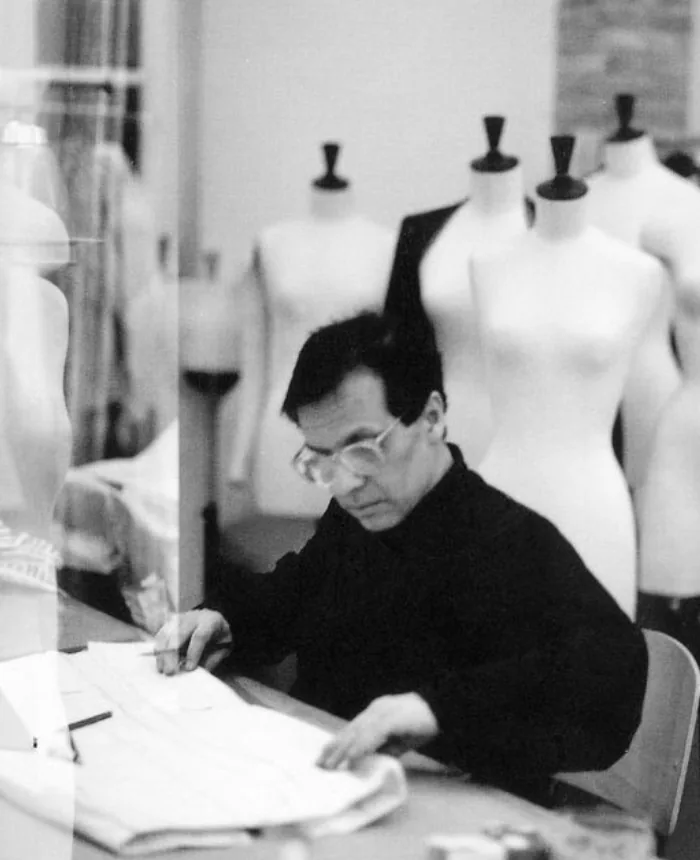
Karl Lagerfeld at a fitting.
London College of Fashion: the industry college
London, East Bank
College of UAL
Design, making, business, media
3 years, or 4 with a placement
London College of Fashion covers the industry end to end, from pattern cutting and bespoke tailoring to management, buying and marketing, and its entry model changes with the course. BA Fashion Design and Development accepts A-levels at 112 UCAS tariff points or the IB Diploma at 25 points, without a foundation year. Its portfolio, of up to 30 pages, is built around technical and practical skill, work in progress and research into the cultural contexts of the contemporary industry.
The business courses have no portfolio stage. For BSc Fashion Management, BA Fashion Marketing and BA Fashion Buying and Merchandising, selection rests on the academic record, the UCAS personal statement and the reference, with a possible online interview; English is IELTS 6.5, with at least 5.5 in each element. The criteria read like a business school’s: numeracy, analytical problem-solving, awareness of current affairs and of how management roles divide in fashion.
Short answer
What is the difference between Central Saint Martins and London College of Fashion?
Both are colleges of University of the Arts London, but they select for different things. CSM’s fashion degrees follow an art-school model: a foundation year is expected, and the portfolio is read for experimental, research-led design. LCF is organised around the industry: its design courses accept A-levels or the IB directly and look for technical skill, and its business, marketing and buying courses require no portfolio at all.
An applicant who applies to both with one portfolio has usually not read either brief. A CSM portfolio shows ideas under development; a portfolio for LCF’s Fashion Design and Development also shows how things are made. For an applicant to a business course, CSM is simply not the relevant college.
Short answer
Is an art foundation required before Fashion Design?
Only at some schools. At Central Saint Martins, A-levels and the IB are accepted for Fashion Design only together with a Foundation Diploma in Art and Design or an equivalent intensive year. LCF’s BA Fashion Design and Development, IFM, the Italian academies, Parsons and FIT do not require one; IFM describes preparation in art, design or a foundation course as a plus but not mandatory.
A foundation year also answers two other problems: too little work for a portfolio and, for Italy, an eleven-year school certificate, where a recognised foundation year is one way to meet the twelve-year rule. UAL’s own Foundation Diploma states that students who complete it receive at least one offer of a UAL undergraduate place, though not necessarily on the course they applied for.
UCAS, the five choices, offer conditions, the CAS and the Student visa: the UK part of the route is shared by every course.Applying to the UK
France: Paris and the question of recognition
Paris adds two questions the other cities do not raise in the same way: what kind of state recognition a diploma carries, and whether the applicant must apply through Parcoursup.
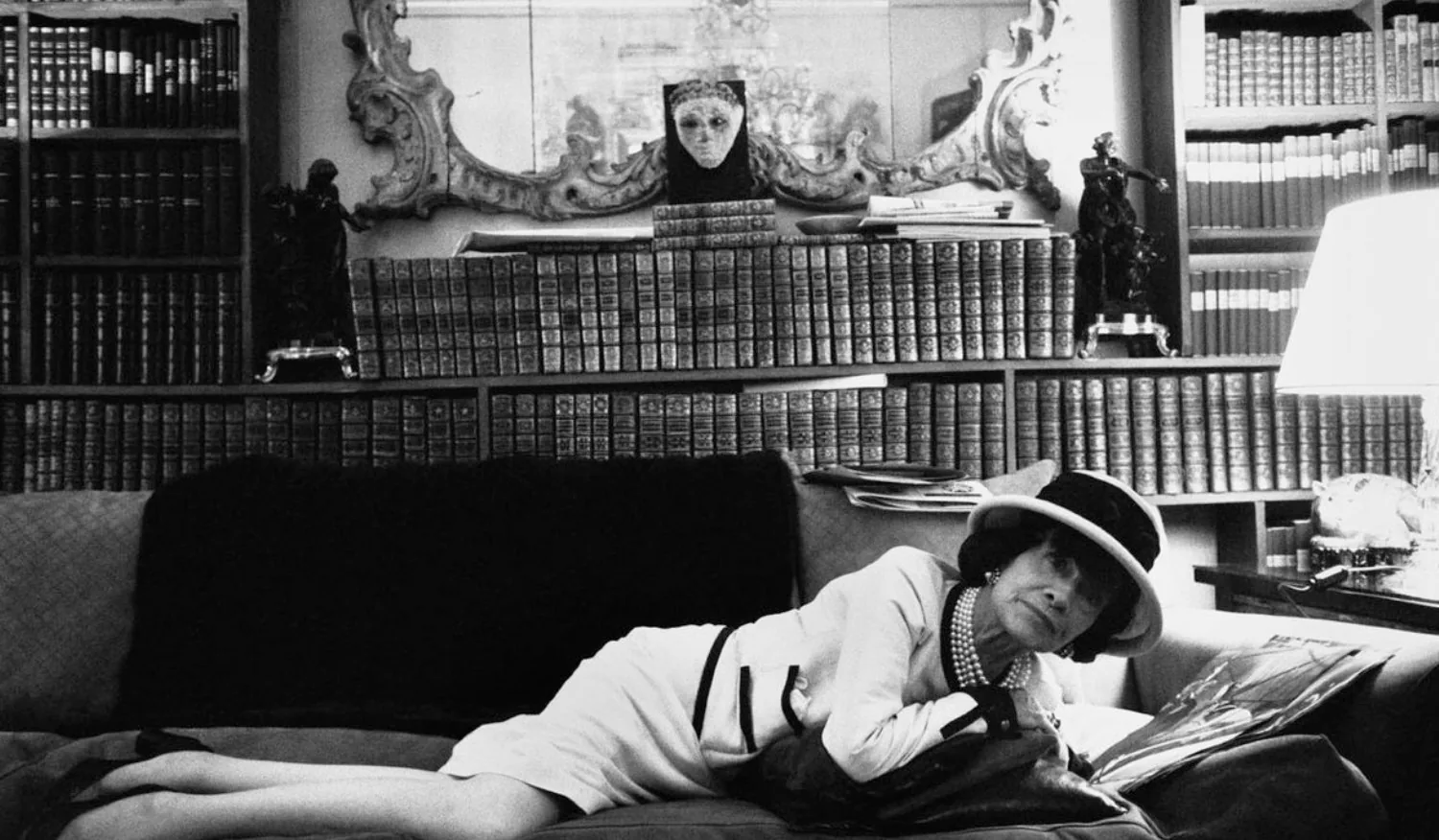
Coco Chanel in her Paris apartment.
Institut Français de la Mode: two degrees, two admissions logics
Paris, Les Docks
Grade de licence
BA Fashion Design · BSc Management
3 years
Institut Français de la Mode runs two undergraduate programmes that sit side by side and select on opposite principles. Both last three years and confer the state grade de licence, the recognised bachelor’s level. Applicants holding or preparing a French diploma, or already studying in French higher education, apply through Parcoursup; those with an international diploma such as the IB, A-levels or the Abitur apply directly on IFM’s site, with a €60 application fee.
The Bachelor of Arts in Fashion Design, taught in French or English, starts with a file: a CV, the last two years of school transcripts, a portfolio of 20 to 25 pages and an imaginary museum. At least four projects in the portfolio must show the whole creative process, from iconographic research and first sketches to experiments with material and volume and the final piece. The museum is a selection of ten works in the broadest sense (painting, photography, performance, music, literature, architecture) that define what inspires and questions the applicant; their own work is excluded. Shortlisted applicants take a 2D graphic assignment of drawing and collage, a 3D creative assignment and an interview with faculty, bringing a fuller physical portfolio with real collages, hand drawings and material experiments. English track: IELTS 6.0 or TOEFL iBT 80, unless exempt.
IFM states that 60% of those it admits come from general education streams, and that drawing and sewing are taught on the course. What cannot be taught in advance is visible creative thinking, and the first stage is built to find it.
The BSc in Management for Fashion and Creative Industries is taught in English and has no portfolio. The file contains a CV, transcripts, an English test (IELTS Academic 6.5, TOEFL iBT 90 or Cambridge 176) and questions on the applicant’s project and motivation; eligible applicants then have an online interview with a faculty jury. Applications for September 2027 open in October 2026.
Short answer
What does IFM look for in Fashion Design applicants?
A creative signature and a visible process rather than finished technique: a portfolio of 20 to 25 pages with at least four projects shown from research to final piece, and an imaginary museum of ten works that shape the applicant’s references. Shortlisted applicants then take 2D and 3D creative assignments and an interview.
IFM’s published portfolio criteria are inventiveness and uniqueness, diversity of tools and techniques, artistic and intellectual curiosity, quality of rendering and clarity of process. The imaginary museum is not a list of favourite designers. It is read as a map of cultural references, and a narrow or predictable selection says as much about an applicant as a strong one.
ESMOD Paris: a moodboard and a made piece
Paris
RNCP level 6
“Styliste Designer Mode” bachelor’s
3 years · 180 ECTS
The atelier: patterns, dress forms, handwork.
ESMOD’s three-year bachelor’s degree, “Styliste Designer Mode”, is registered as an RNCP level 6 certification, recognised by the state through France Compétences. For first-year entry it does not ask for a portfolio. After the application, the school sends a set exercise: a moodboard and a piece to be made, with a creative and explanatory study (its own example is a piece assembled from imposed parts). An interview with the ESMOD team follows, where language level is also assessed; no language certificate is required for the bachelor’s.
The application fee is €95, admissions for 2027–28 open on 1 October 2026, and classes fill progressively, generally by May. It is one of the few first-year routes in this guide where making something is part of admission from the start, and one of the more accessible for an applicant without a portfolio.
École des Arts Décoratifs: a public art school
Paris, rue d’Ulm
Public, PSL
Common first year
Competitive entry
École des Arts Décoratifs – PSL is a public school of art and design, and its route into fashion is indirect. All first-year students follow a common multidisciplinary year and choose a department at the end of it; Fashion and Accessory Design is taught from the second year of the licence cycle.
First-year entry is a competitive examination through Parcoursup. The admissibility stage asks for two digital files: personal work, and a response to a subject published online and completed at home. Admissible candidates then produce work on site and are interviewed by a jury. For the 2026 session the school set a maximum of 72 first-year admissions. Candidates outside Parcoursup need a waiver requested from the school in advance.
For an applicant with a serious art practice who can work through a French-language procedure, it is the reference point for an art-school education in Paris. For everyone else it is a useful contrast: selection by what the applicant can make in the room.
Études en France, the Campus France file, the interview and the visa: the French part of the route is set out on the destination page.Applying to France
The United States: Parsons and FIT
In New York the portfolio sits inside a complete American application: school record, essays, recommendations. The two schools most often considered for fashion are built on different premises.
Parsons School of Design: an art school inside a university
New York
Part of The New School
BFA Fashion Design
4 years · 120 credits
Parsons School of Design is part of The New School. Its BFA in Fashion Design begins with the first-year curriculum shared by every Parsons undergraduate programme (drawing and imaging, space and materiality, time, sustainable systems, integrative studio) and moves into fashion studios in the second year, with four pathways: Womenswear, Menswear, Fashion Product and Fashion Textiles.
Applicants use the Common Application and add a Parsons essay of 300 to 400 words on what drew them to the programme, a counselor recommendation, a teacher recommendation and transcripts. SAT and ACT scores are not required and play no part in review. English: IELTS 7.0, or an equivalent TOEFL, PTE, Duolingo or Cambridge score.
The portfolio for every BFA programme is eight to twelve slides, with up to five more showing process, and the applicant describes ideas, sources and materials for at least two pieces. Parsons judges it on technical and conceptual abilities. It asks applicants to explain any use of AI and recommends against fully AI-generated work, and against fashion styling of pre-made or purchased garments. For the BBA in Strategic Design and Management, the portfolio is optional.
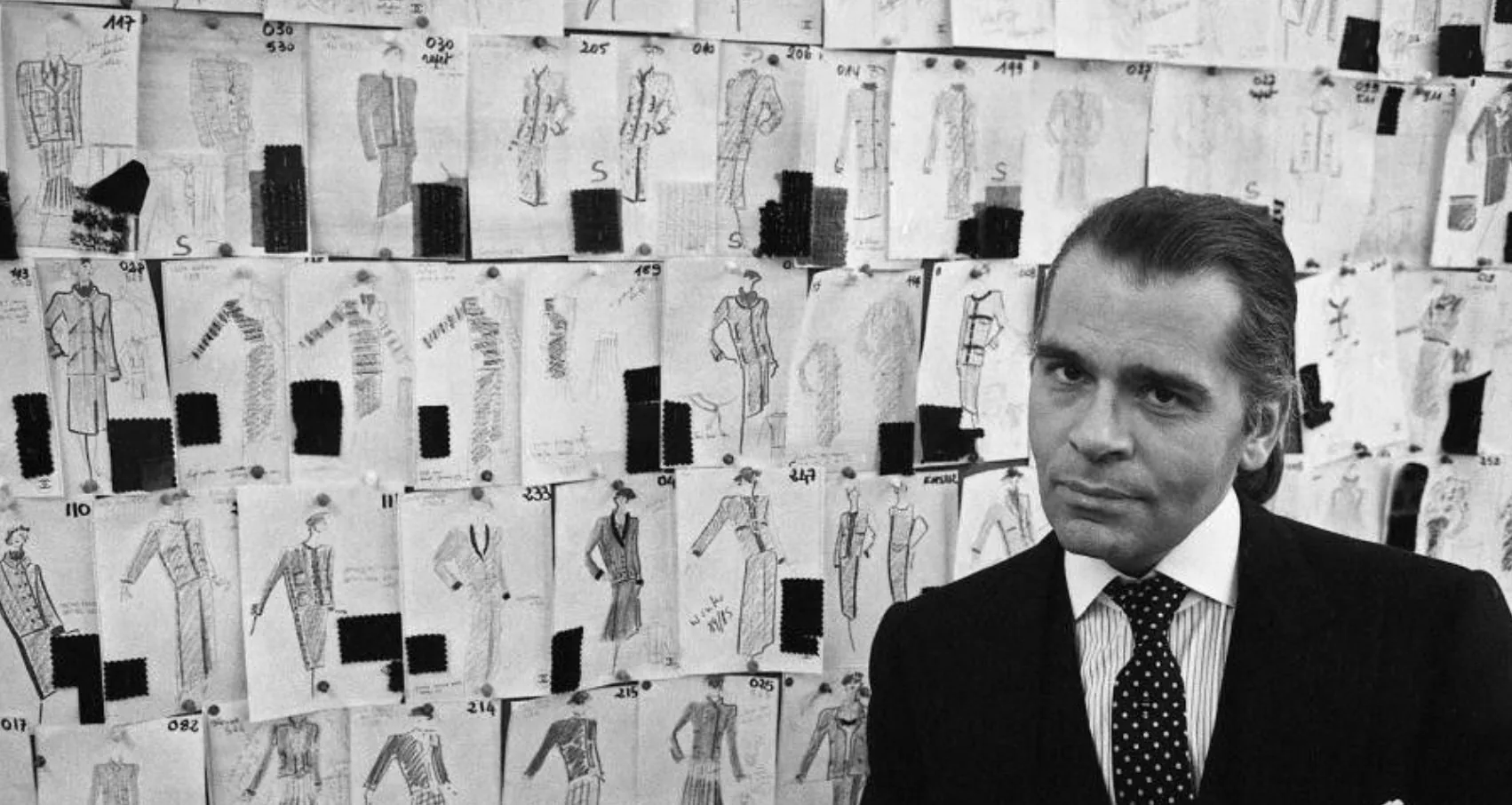
A wall of sketches with fabric swatches: a collection developing from drawing to material. It is this process that many schools ask to see in a portfolio.
Fashion Institute of Technology: an associate degree first
New York
State University of New York
Fashion Design AAS, then BFA
2 + 2 years
The Fashion Institute of Technology is part of the State University of New York, and its structure surprises most international families. School leavers apply to a two-year associate degree (AAS), not directly to a bachelor’s; after the AAS, students apply to a BFA or BS, with priority for FIT’s own graduates.
The Fashion Design AAS portfolio is the most construction-heavy in this guide. It has three parts: a written answer of up to 250 words about a time the applicant’s view differed from a teacher’s or employer’s; two design projects, a four-piece sportswear wardrobe drawn in colour on hand-drawn figures (no tracing or templates) with real fabric swatches identified by weave and fibre, and four to eight sheets of original fashion artwork; and a sewing project of four to nine photographs of two or three garments the applicant has sewn, front and back. Fashion Business Management has no portfolio: FIT asks for one only from applicants to art and design majors and to Film and Media.
Pratt Institute: observation as evidence
Brooklyn
BFA Fashion Design
General visual portfolio
Pratt Institute, in Brooklyn, asks fashion applicants for the same general visual portfolio as its other art and design majors: ten to twenty recent works, including three to five drawings from direct observation, with no requirement to be fashion-specific, and a Pratt essay of 250 to 500 words. Where FIT wants to see sewing and Parsons wants to see thinking, Pratt wants to see how an applicant looks.
The Common Application, essays, financial aid and the student visa: the US part of the route is set out on the destination page.Applying to the US
What does a fashion school actually ask to see?
The matrix is EDMONT’s own reading of the published requirements for first-year entry, programme by programme. It records what each school asks an applicant to submit or do. It does not measure selectivity, and it is not a ranking.
The EDMONT admissions evidence matrix: first-year entry
●Required700-word trend paper and personal statement
–Not asked
–Not asked
●RequiredVisual research and references
PolimodaFashion DesignFlorence
●RequiredOverview of previous work
–Not asked
●RequiredSeven short answers, CV and motivation letter
–Not asked
●RequiredWith every applicant
–Not asked
PolimodaFashion BusinessFlorence
–Not asked
–Not asked
●RequiredEssay on five inspirations and seven short answers
–Not asked
●RequiredWith every applicant
–Not asked
NABABA Fashion DesignMilan · Rome
◐Either / or5 to 10 projects, instead of the set project
◐Either / orThree subjects and three mini projects
●RequiredArtistic statement, up to 500 words
○OptionalTechnical drawings accepted
–Not asked
●RequiredImage research and keywords
IED MilanoBA Fashion DesignMilan
◐Either / orProcess over result, up to 8 MB
◐Either / orOne of four briefs, three slides
○OptionalKeywords or a text of up to 500 words
–Not asked
●RequiredBuilt on the creative work
●RequiredProcess is marked
Politecnico di MilanoDesign della ModaMilan · Selection by the TOLD test; taught in Italian
–Not asked
–Not askedA written test (TOLD) instead
–Not asked
–Not asked
–Not asked
–Not asked
United Kingdom
Central Saint Martins, UALBA Fashion Design, five pathwaysLondon · Foundation year needed with A-levels or the IB
●RequiredUp to 25 pages, after an eligibility check
–Not asked
●RequiredUCAS personal statement
–Not askedJudged within the portfolio
◇If shortlistedOnline, 15 to 20 minutes, if invited
●RequiredResearch and sketch development pages
London College of Fashion, UALBA Fashion Design and DevelopmentLondon
●RequiredUp to 30 pages
–Not asked
●RequiredUCAS personal statement
●RequiredTechnical and practical skills
◇If shortlistedOnline, 15 to 20 minutes, if invited
●RequiredWork in progress, contextual research
London College of Fashion, UALBSc Fashion Management · BA Fashion Marketing · BA Fashion Buying and MerchandisingLondon
–Not asked
–Not asked
●RequiredUCAS personal statement
–Not asked
◇If shortlistedOnline, 15 to 20 minutes, if invited
–Not asked
France
Institut Français de la ModeBachelor of Arts in Fashion DesignParis
●Required20 to 25 pages, plus an imaginary museum
◇If shortlisted2D and 3D assignments
–Not asked
◇If shortlisted3D assignment, physical portfolio
◇If shortlistedFaculty jury
●RequiredAt least four projects shown in full
Institut Français de la ModeBSc in Management for Fashion and Creative IndustriesParis
–Not asked
–Not asked
●RequiredQuestions on project and motivation
–Not asked
◇If shortlistedOnline jury after the file stage
–Not asked
ESMOD“Styliste Designer Mode” bachelor’sParis
–Not askedNot required for year one
●RequiredMoodboard and a piece to make
●RequiredExplanatory study, motivation letter
●RequiredA made piece
●RequiredWith the ESMOD team
●RequiredMoodboard
École des Arts Décoratifs – PSLFirst year of the licence, then Fashion and Accessory DesignParis · Competitive entry through Parcoursup
●RequiredFile of personal work
●RequiredHome project, then work produced on site
–Not asked
–Not asked
◇If shortlistedJury, if admissible
–Not asked
United States
Parsons School of DesignBFA Fashion DesignNew York
●Required8 to 12 slides, up to 5 more of process
–Not asked
●RequiredParsons essay, 300 to 400 words
–Not asked
–Not asked
●RequiredProcess described for two pieces
Parsons School of DesignBBA Strategic Design and ManagementNew York
○Optional2 to 12 slides
–Not asked
●RequiredParsons essay, 300 to 400 words
–Not asked
–Not asked
–Not asked
Fashion Institute of TechnologyFashion Design AASNew York · School leavers enter the AAS, then apply to the BFA
●RequiredBuilt from set briefs, 11 to 23 items
●RequiredTwo design projects
●Required250-word answer plus the application essay
●RequiredTwo or three garments sewn by the applicant
–Not asked
●RequiredInitial pencil sketch and notes on each image
Fashion Institute of TechnologyFashion Business Management AASNew York
–Not asked
–Not asked
●RequiredApplication essay
–Not asked
–Not asked
–Not asked
Pratt InstituteBFA Fashion DesignBrooklyn
●Required10 to 20 works, 3 to 5 observational drawings
–Not asked
●RequiredPratt essay, 250 to 500 words
–Not asked
–Not asked
○OptionalProcess welcome, kept to a minimum
Source: each institution’s official admissions pages, last reviewed September 2026. “If shortlisted” covers stages reached only after a first review or by invitation.
Reading the matrix
The portfolio is not universal, even for design. Marangoni, NABA, IED, ESMOD and FIT replace or define it with set work, and the Politecnico uses a test instead.
Construction is rarely asked for at entry. FIT wants garments the applicant has sewn and ESMOD a made piece; most schools teach making from the beginning and read potential elsewhere.
Interviews usually follow a first reading. CSM, LCF, IFM and ENSAD interview a shortlist; Polimoda, IED and ESMOD interview as part of the process; Parsons, Pratt, FIT, NABA, Marangoni and the Politecnico list no interview for first-year entry.
Short answer
Do you need a portfolio for fashion school?
For most fashion design degrees, yes, though not always as a free portfolio, and almost never for fashion business. Of the programmes in this guide, CSM, LCF, IFM, Parsons and Pratt require a portfolio for design; NABA and IED accept a portfolio or a set project; Marangoni, ESMOD and FIT set the work themselves; the Politecnico di Milano uses a test; and the business programmes at LCF, IFM, Polimoda, Marangoni and FIT ask for none.
What matters is the evidence the programme names. A strong general art portfolio can be the wrong submission for FIT, which asks for specific projects and sewn garments, and more than is needed for Marangoni, which asks for six ideas.
Short answer
How is a fashion portfolio different between schools?
In length, content and purpose. CSM asks for up to 25 pages with a set structure of research, sketch development and finished illustration; LCF’s Fashion Design and Development up to 30 pages centred on technical skill; IFM 20 to 25 pages with at least four projects shown in full process, plus an imaginary museum; Parsons eight to twelve slides in any media; Pratt ten to twenty works including observational drawing; FIT a set of prescribed projects and sewn garments.
The same body of work usually has to be re-edited for each school rather than resubmitted. A portfolio built for Parsons’ eight to twelve slides is too thin for IFM’s first stage, and one built on CSM’s research pages lacks the construction evidence FIT asks for.
EDMONT / FASHION ADMISSIONS FRAMEWORK
The EDMONT fashion admissions framework
We do not begin by asking which famous school a student prefers. We begin by establishing what the application needs to prove.
Eight questions structure that work, roughly in this order.
01
Direction
Design, business, communication or a hybrid. We settle the discipline before the destination, because the discipline decides the evidence.
02
Academic eligibility
Whether the school certificate opens the route: twelve years for recognised Italian courses, a foundation year for CSM, associate-degree entry at FIT, Parcoursup or a direct application in France.
03
Creative readiness
What the applicant can already show, what can be built in the time left, and whether the gap lies in ideas, drawing, making or presentation.
04
Admissions format
Portfolio, set task, trend paper, questionnaire, test or jury: each is prepared differently, and several run to their own calendars.
05
Educational environment
Art school, industry college, AFAM academy or university: the same subject is taught as an experiment in one place and as a profession in another.
06
Career geography
Where the student wants to work after graduating, and which city’s industry, internships and alumni point that way.
07
Financial architecture
Tuition, annual enrolment fees, programme length (three years or four), living costs, and whether any scholarship is realistic for an international applicant.
08
Application positioning
How the applicant’s story reads against the programme’s published criteria, and how the shortlist balances ambition with certainty.
Your shortlist should begin with your profile, not a ranking
EDMONT begins fashion admissions work with an individual reading of four things: the student’s academic background, their creative readiness, the discipline they actually intend to study, and the published requirements of the institutions under consideration. A shortlist is built only after that, with every school on it for a reason the application can support.
We do not promise admission: decisions belong to each school. We are responsible for checking requirements against primary sources, for an honest reading of the applicant’s position, and for the quality and timing of the preparation.
EDMONT / admissions discussion
The applicant’s profile
Tell us which curriculum the applicant follows, the intended year of entry and the discipline under consideration: design, business or communication. That is enough for a first substantive reply.